Search results for “tectonics”

Plate Tectonics: An Introduction

In the early 1900s, most geologists thought that Earth's appearance, including the arrangement of the continents, had changed little since its formation. This video segment, adapted from the "Earth Explorer" episode of Discovering Women, describes the impact the theory of plate tectonics has had on
NOVA scienceNOW: Mass Extinction

This video segment adapted from NOVA scienceNOW examines a developing theory that might explain a 250-million-year-old "murder mystery." While several possible causes have been considered for the mass extinction that occurred at the end of the Permian period, the scientists featured in the video thi

The Grand Canyon: How It Formed

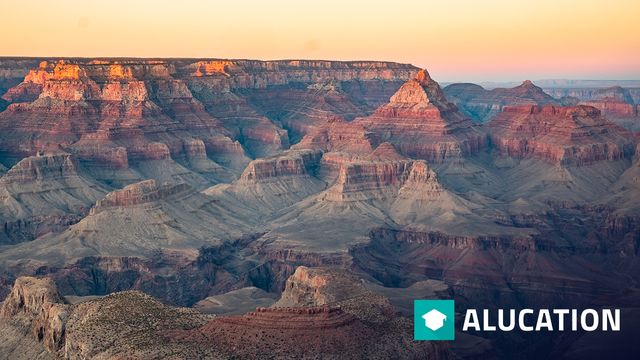
The theory of how the Grand Canyon was formed is shown in this animation from NOVA, and features rare footage of a phenomenon known as debris flow. CREDITS: https://www.pbslearningmedia.org/credits/ess05.sci.ess.earthsys.canyon/ LICENSE: https://www.pbslearningmedia.org/help/full-license-for-secti

Origin and springs of the Himalayan mountains

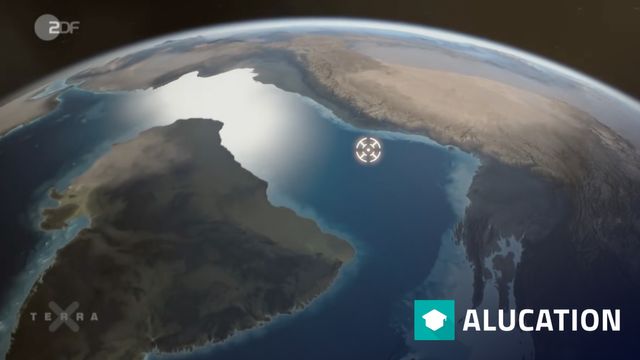
Due to the displacement of tectonic plates, several geological seams were created at the same time when unfolding. The friction of the rock layers generates so much heat that the heated water deep down is pushed up to the surface. Author: ZDF/Terra X/Fascination Earth/C. Götz-Sobel/O. Rötz/M. Zimme

The History of the Brocken

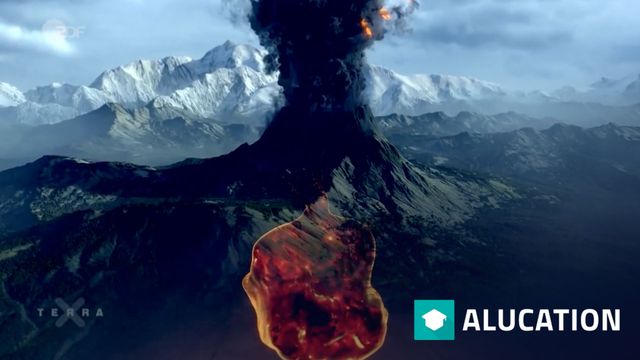
The Harz is Germany's highest low mountain range and formed around 330 million years ago. But one of its peaks is about 40 million years younger: the Brocken, the highest peak in the Harz Mountains. Authors: ZDF/Terra X/K22/C. Eppelmann/E. Frank/S. Engel/Kawom/M. Heß Translation and dubbing: alugh

How is marble formed?

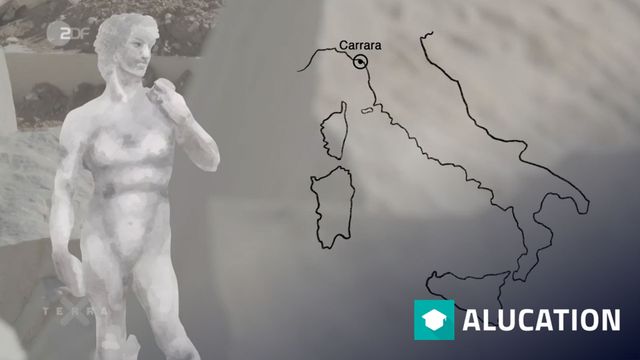
Artists such as Michelangelo created masterpieces from marble quarried near Carrara. The formation of this marble began 200 million years ago in a shallow, warm ocean. Authors: ZDF/Terra X/O. Gurr/L. Bockius/E. Jesse/KawomGbR/K22/M. Heß Translation and dubbing: alugha Click here to see more video

Deep Ocean Volcanoes

Learn about underwater volcanoes and the discovery of the erupting deep-ocean volcano West Mata. The video provides students with the opportunity to visualize a phenomenon that is too dangerous and too remote to experience. Students view a visualization of the ocean floor as well as footage that cap

Earth as a System

Earth is a complex, evolving body characterized by ceaseless change. To understand Earth on a global scale means using a scientific approach to consider how Earth's component parts and their interactions have evolved, how they function, and how they may be expected to further evolve over time. This

Planetary Geology | NASA Planetary Sciences

Meet NASA scientist Lynn Carter, who studies the geology of planetary surfaces, in this video adapted from NASA's Goddard Space Science Center. Carter describes how scientists learn about Earth by studying other planets and moons. Objects such as the Moon have older surfaces, which serve as a record