Q12 Acid-Base Indicators - Part 3
Part 3 on acid-base titrations. Explanation of the indicator GGW and the calculation of the turnover area Original: "Wolfgang Dukorn" Original: German. All translations in this video have been done by the alugha AI.
Part 3 on acid-base titrations. Explanation of the indicator GGW and the calculation of the turnover area Original: "Wolfgang Dukorn" Original: German. All translations in this video have been done by the alugha AI.
Learn the basics about what stomach acid is as part of the acids and bases topic. JOIN our platform at www.fuseschool.org This video is part of 'Chemistry for All' - a Chemistry Education project by our Charity Fuse Foundation - the organisation behind The Fuse School. These videos can be used in
Acid and base definitions according to Brönsted are explained. At the end, protolysis reactions are described. Original: "Wolfgang Dukorn" Original: German. All translations in this video have been done by the alugha AI.
The most important acids and bases are mentioned. These are very important and need to be learned. Original: "Wolfgang Dukorn" Original: German. All translations in this video have been done by the alugha AI.
Acid-base buffers are briefly explained, as well as the buffering effect. The main point of the screencast, however, is the pH value calculation in the buffer range. Furthermore, it is described how buffer systems are formed in titrations of weak acid with a strong base. Original: "Wolfgang Dukorn"
Part 1 on acid-base titrations. An acid-base titration is explained and the formation of a titration curve is described. Original: "Wolfgang Dukorn" Original: German. All translations in this video have been done by the alugha AI.
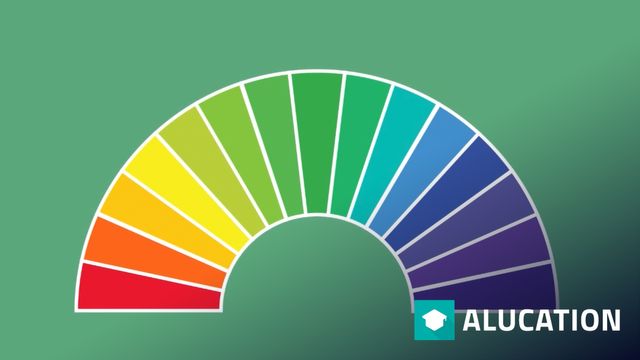
Learn the basics about the pH scale, universal indicator and litmus paper. Indicators tells if something is acidic, alkaline or neutral. Indicators are substances that show different colours when they are in acidic or alkaline conditions. Litmus paper is a simple indicator that tells us whether so
The acid-base titration is explained and an example calculation is performed. Original: "Wolfgang Dukorn" Original: German. All translations in this video have been done by the alugha AI.
Each acid-base reaction usually consists of 2 corresponding pairs. Original: "Wolfgang Dukorn" Original: German. All translations in this video have been done by the alugha AI.
An acid is a substance that will dissociate in water to give a proton (or H+ ion) and a conjugate base. An acid is considered to be strong if dissociation nears 100%, and weak if dissociation is usually less than 1%. In this lesson, we will learn about strong alkalis and weak alkalis. An alkali
Learn the basics about Indicators, more specifically for acid and bases. An indicator is a large organic molecule that works somewhat like a " color dye". Find out more in this video! This Open Educational Resource is free of charge, under a Creative Commons License: Attribution-NonCommercial CC BY
Why do carboxylic acids react as acids, but alcohols do not? Original: "Wolfgang Dukorn" Original: German. All translations in this video have been done by the alugha AI.