Search results for “Science Technology Space NASA Research Astronomy”

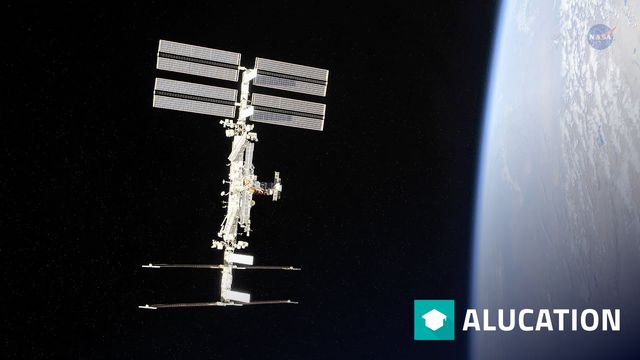
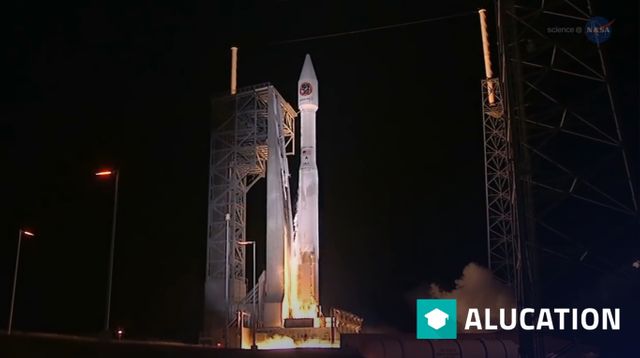
NASA ScienceCasts: Making Space for Technology Development

Click here to see more videos: https://alugha.com/NASA The International Space Station provides the only microgravity environment in which we can test technologies critical to our deep-space exploration in the near and far-term future. Space Station Research & Tech: http://www.nasa.gov/iss-science
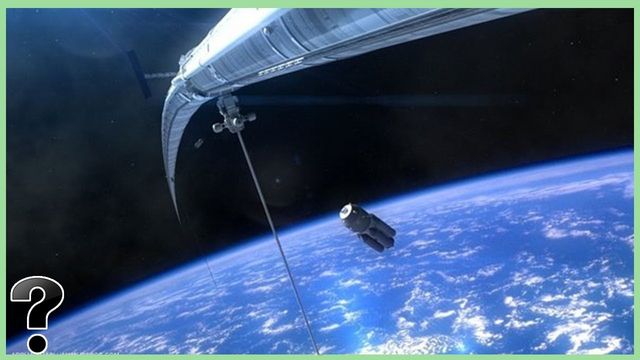
Can We Build Into Space?

Imagine for a second, a skyscraper, the tallest skyscraper ever built, that’s 100 kilometers tall. You could take an elevator from the ground floor of this skyscraper all the way up to where space begins to a sky bar where you could look at the earth below, and maybe even be launched into space from

The Formation of Stars | NASA Planetary Sciences

Discover how the James Webb Space Telescope will help us better understand solar system formation in this video from NASA. Images from the Hubble Space Telescope show star-forming regions within the Eagle nebula: visible light images show vast clouds of gas and dust, and infrared images provide a gl

The Evolution of the Kuiper Belt | NASA Planetary Sciences

Learn about Neptune's gravitational effect on dust contained in the Kuiper belt and discover how it could help astronomers look for planets around other stars. This video from NASA explores the idea that if would-be alien astronomers were looking for planets around the Sun, they could potentially de

Rover Results on Mars | NASA Planetary Sciences

Discover the instruments that Curiosity, a rover on Mars, used to gather and analyze soil samples in this video from NASA's Jet Propulsion Laboratory. In 2012, Curiosity took its first scoop of Martian soil to test and analyze from an area called Rocknest. One of the project scientists describes how

Voyager: Humanity's Farthest Journey | NASA Planetary Sciences

In 1977, The Voyager program sent two spacecraft to explore the solar system and travel to interstellar space. In this video from NASA's Jet Propulsion Laboratory, learn how Voyager 1 and Voyager 2 are now the farthest any spacecraft has traveled from the Sun, and are still making discoveries in the

Measuring Mars's Magnetic Field | NASA Planetary Sciences

Learn about the Mars Atmosphere and Volatile EvolutioN (MAVEN) mission to Mars in this video from NASA's Goddard Space Flight Center. Mars does not have a global magnetic field like Earth but does have patches of magnetic fields. Scientists use magnetometers to study the planet's magnetic anomalies.

Investigating the Moon's Interior | NASA Planetary Sciences

Discover how scientists plan to use data from the GRAIL mission and a map of the Moon's gravitational field to learn about its internal structure. By comparing data about the Moon's gravity with information about its topography, scientists can gain a better understanding of the Moon's formation and