Search results for “Philosophie (domaine d'étude)”

Define Your Philosophy

Have you ever thought to examine the advantages and disadvantages of your personal philosophy? The way you view yourself and the world around you could be holding you back from achieving your goals in life. At the same time, you are capable of changing and even designing your own philosophy into a p

Nietzsche: Masters and Slaves

What if morality is just a fiction used by the herd of inferior humans to hold back the few superior humans? In this final part of our Sprouts special with Stephen Hicks, we examine Nietzsche's explanation of how ethics evolves and the consequences for master types living in a world ruled by slave m

Rousseau's 5 Stages of Child Education

Rousseau's philosophy of education is based on the idea that children should develop a strong, virtuous character, the capacity for reason, and a refined sense of feeling. To explain his ideas, Rousseau wrote the book "Emile or On Education". It tells the story of a boy who goes through childhood, a

The Particle Model & the States of Matter

The particle model, the 1st atomic model, is explained. It is based on a thought experiment and describes the structure of matter and the states of matter in an easy-to-understand way. Original: "Chemistry and biology - get it!" Original: German. All translations in this video have been done by th

Nietzsche: God is dead

"God is dead. God remains dead. And we killed him," wrote Friedrich Nietzsche in 1882. To understand what the German philosopher meant and what he thought about man, morality and society as a whole, we collaborated with Professor Stephen Hicks for this Sprouts special series. Support us on Patreon

John Locke: How to Form Free Thinkers

Locke's ideas on religion and democracy became the basis of most liberal societies, making him the father of liberalism. Some, however, believe that his parenting guide, "Some Thoughts Concerning Education," may have been even more influential. You can learn more about the ideas from 1694 that are s

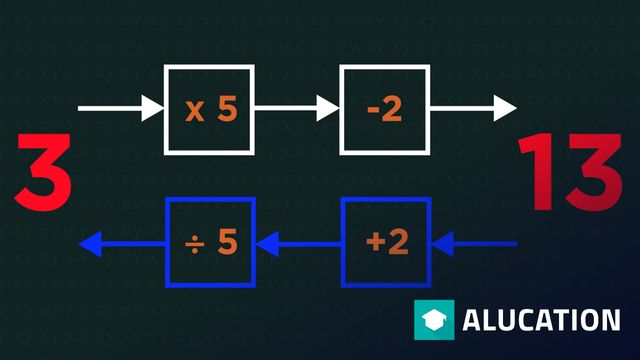
Inverse Functions | Algebra | Maths | FuseSchool

Every operation has an opposite. With functions the opposite is called the inverse function. It undoes the function and returns you to the initial input. There is a simple process to follow to find the inverse of any function which we look at in this video. 1) Start by writing the function as y=