Key takeaways
- alugha at CeBIT Istanbul 2014: the team exhibited at CeBIT Bilişim Eurasia in the German Pavilion, Hall 9, Stand 9E01-07, alongside the Fraunhofer Institute.
- One video in many languages: while most tech companies looked West, alugha went East to show multilingual video as the bridge between markets that do not share a language.
- The conversations were the win: enquiries from the Turkish Ministry of Education, an airline streaming prospect, an education video portal, and two new users signed at the booth.
- The Fraunhofer Institute confirmed the idea: a shared stand led to a plan to bring the Fraunhofer video library onto alugha after the fair.
- A language barrier proved the point: gestures closed deals where words could not, the exact gap multilingual video removes. alugha still ships that as the default.
- The trip ended on a high: a German Consulate reception, a closing video, and a team convinced Istanbul was the right call.
What alugha did at CeBIT Istanbul 2014
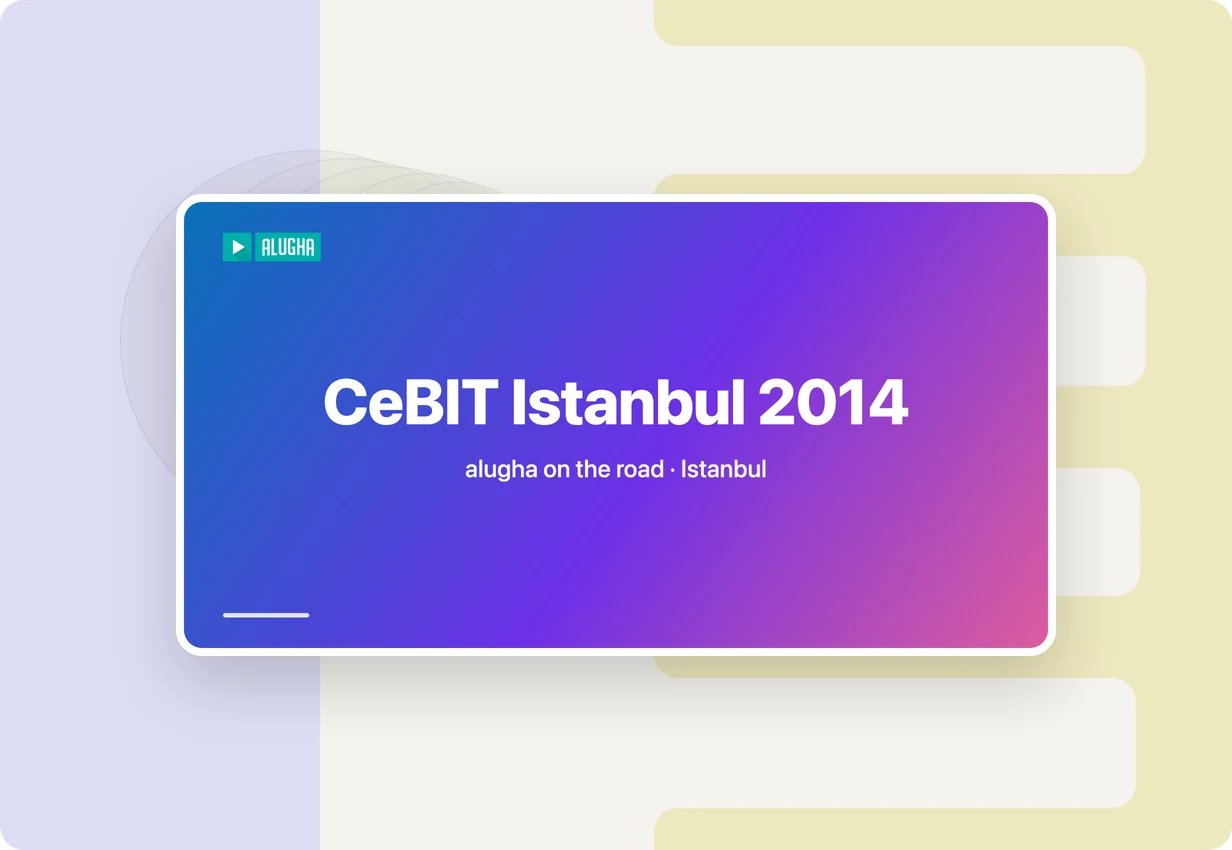
In 2014 alugha packed up its booth and flew to Istanbul for CeBIT Bilişim Eurasia, the regional edition of the big German IT fair. The reasoning was a little contrarian: while most of the tech world pointed its sales effort West, alugha went the other way. CeBIT Istanbul is the doorstep to the West for many Eurasian countries, and for alugha it was the doorstep to the East. Technology was rising fast across Eastern Europe and Asia, yet hardly anyone in the West understood Turkish, Russian, Hindi, or the dozens of other languages spoken there. A platform that turns one video into many had a real reason to be in that room.
The team exhibited in the German Pavilion, Hall 9, Stand 9E01-07, sharing the space with companies like the Fraunhofer Institute and showing work made in Germany. The plan was simple: be available for anyone who wanted to talk about multilingual video, from producers and video makers to programmers and users. After a strike-delayed flight out of Munich and a stubborn visa machine, an old friend, Attila, picked the team up and by 7pm the booth was built and tested.
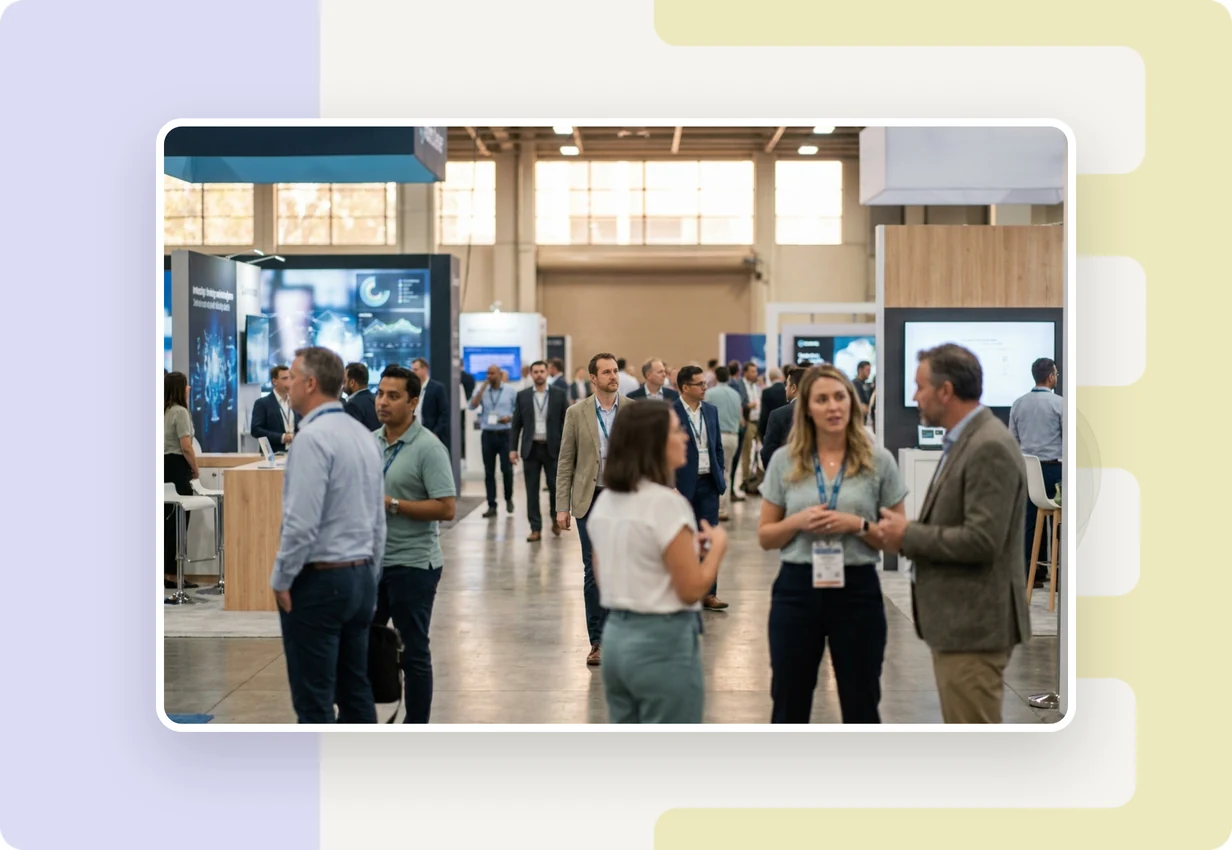
The first fair day started with a simple decision: if visitors would not come to the booth, the team would go to them. The neighbours, Auerswald with its IP telephony systems on one side and Wacom with its drawing tablets on the other, became the first audience, and in the quieter stretches the team demonstrated alugha to both and signed two new users.
Highlights from alugha at CeBIT Istanbul 2014
The language barrier on the show floor was real: the team did not speak Turkish, many visitors spoke neither German nor English, and hands, feet, and gestures filled the gap so deals still closed. The standout conversation came on day two, when with a translator’s help two visitors turned out to be from the Turkish Ministry of Education, searching for a way to offer its huge video library in many languages. They had found nothing that fit, had come specifically to see alugha, and asked the team to stay reachable that week for a follow-up with the secretary of education.
That evening the German Consulate hosted a reception, where the German General Consul, Jutta Wolke, greeted the team in person. Day three opened with a small but important fix: the exhibition management got the internet working, and steady connectivity brought a wave of curious visitors to the stand.
The most meaningful moment came at the shared stand with the Fraunhofer Institute, which confirmed alugha was an exceptional idea and exchanged cards to bring the Fraunhofer video library onto the platform after the fair. Right after came a visitor building a streaming service for large airline clients with self-hosted videos; he had found nothing for the multilingual part and left saying the team would hear from him within weeks. Two education specialists also showed their language-learning video portal, whose large user base had searched a long time before finding a match in alugha.
Why a fair like CeBIT mattered for multilingual video
The trip put a simple thesis to the test. Markets that do not share a language still need to share knowledge, and video is how a lot of that travels. A single video in one language quietly leaves most of the world out, and producing a separate edit per market is slow and expensive. The Ministry of Education with its untranslated library, the airline streaming prospect, and the education portal all described the same gap.
alugha closes that gap by keeping one video as the source of truth and layering many language tracks onto the same file. Viewers pick their language in the player, so one embed serves every market with no separate library and no version drift between countries. For an organisation sitting on hundreds of videos, that is the difference between a translation project that never ends and a video translation platform that actually scales.
The education conversations pointed at where this matters most. Learners remember more when content reaches them in their own language, the heart of educational video localization. Reach is only half the story, though. The same single file also carries accessible subtitles, so inclusive content needs no separate production. And because where content lives mattered to the organisations alugha spoke with, GDPR-compliant video hosting in Germany became part of the pitch.
What the team took home from Istanbul
The fair closed with a handful of promising talks and a long list of smaller ones, exactly the hope going in, and the team came away sure the city was worth the journey.
A closing video captured the impressions, and the credit belonged to the whole team: Niklas, who made the booth run demos with no internet; Steffen, who pushed the video-page changes; Katharina, who prepared the fair; Meike, who made the booth look the part; and Arthur, who finished the graphics, filmed throughout, and presented alugha with real flair. A special thanks went to Atilla Öztürk, who showed the team the best side of Istanbul and helped at the booth every day. Being in a room full of people who needed exactly what alugha builds was, in the end, the right call.
FAQ
What was alugha at CeBIT Istanbul 2014?
alugha exhibited at CeBIT Bilişim Eurasia in Istanbul in 2014 to show its multilingual video platform. The booth was in the German Pavilion, Hall 9, Stand 9E01-07, shared with companies including the Fraunhofer Institute.
Where was the alugha booth at CeBIT Istanbul 2014?
The alugha booth was in the German Pavilion, Hall 9, Stand 9E01-07, next to Auerswald with its IP telephony systems and Wacom with its drawing tablets.
Why did alugha go to Istanbul instead of a Western market?
While most tech companies focused on the Western world, alugha targeted the East. CeBIT Istanbul is the doorstep to the West for many Eurasian countries, and alugha saw multilingual video as the bridge for markets that do not share a common language.
Who visited alugha at CeBIT Istanbul 2014?
Highlights included the Turkish Ministry of Education looking to translate its video library, the Fraunhofer Institute agreeing to bring its videos onto alugha after the fair, an airline streaming prospect, an education video portal, and two new users signed at the booth.
Is alugha video hosting GDPR-compliant?
Yes. alugha hosts video in Germany with GDPR-compliant infrastructure, so business and education content stays inside an EU data-protection framework.
Event: CeBIT Bilişim Eurasia (CeBIT Istanbul) 2014. Location: German Pavilion, Hall 9, Stand 9E01-07, Istanbul, Turkey. This recap consolidates alugha’s original CeBIT Istanbul trip diary. More about the German Pavilion exhibitor programme is on the official German Pavilion website.