Search results for “Science Technology Space Missions Unmanned Mars Mars Climate Orbiter”

What If We Nuked Mars?

What if we nuked mars? I know it seems like a question from far out of left field, but Elon Musk, head of Tesla as well as SpaceX, said in 2015 that nuking mars with thermonuclear weapons would be a great way to heat up the planet so humans could live on it. But would this actually work? And what ar
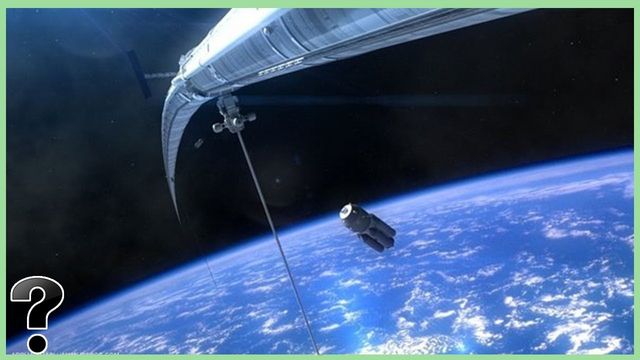

Can We Build Into Space?

Imagine for a second, a skyscraper, the tallest skyscraper ever built, that’s 100 kilometers tall. You could take an elevator from the ground floor of this skyscraper all the way up to where space begins to a sky bar where you could look at the earth below, and maybe even be launched into space from

Measuring Mars's Magnetic Field | NASA Planetary Sciences

Learn about the Mars Atmosphere and Volatile EvolutioN (MAVEN) mission to Mars in this video from NASA's Goddard Space Flight Center. Mars does not have a global magnetic field like Earth but does have patches of magnetic fields. Scientists use magnetometers to study the planet's magnetic anomalies.

Rover Results on Mars | NASA Planetary Sciences

Discover the instruments that Curiosity, a rover on Mars, used to gather and analyze soil samples in this video from NASA's Jet Propulsion Laboratory. In 2012, Curiosity took its first scoop of Martian soil to test and analyze from an area called Rocknest. One of the project scientists describes how

Space and Climate Change

Our video explains how space technology helps us combat climate change. Learn how satellites are crucial in understanding and addressing the climate crisis. Science is working to protect our planet! #worldspaceweek #space #wsw #science #ssq #spaceweek #explainervideos #simpleshowfoundation #sdgs Tr

Curiosity Rover Hits Paydirt on Mars | NASA Planetary Sciences

Learn about the discovery of conditions that would have been suitable for life on ancient Mars. In 2013, the Mars Science Laboratory (MSL) science team released initial findings from its first drilled sample using the Curiosity rover. MSL scientist Joel Hurowitz describes the sedimentary rock sample

Wind and Radiation on Mars | NASA Planetary Sciences

Discover how and why Curiosity, the Mars rover, measures wind and radiation on Mars. Mars Science Laboratory scientist Ashwin Vasavada describes two of the instruments onboard the rover that study Mars' present environment. The Radiation Assessment Detector (RAD) measures high-energy radiation from

Methane on Mars | NASA Planetary Sciences

Explore whether Mars is alive -- geologically or biologically -- in this video from NASA. Satellite images and the recent discovery of water ice on the surface of Mars suggest liquid water is flowing beneath the surface, which could make it a habitable planet. The controversial discovery of methane

NASA ScienceCasts: Making Space for Technology Development

Click here to see more videos: https://alugha.com/NASA The International Space Station provides the only microgravity environment in which we can test technologies critical to our deep-space exploration in the near and far-term future. Space Station Research & Tech: http://www.nasa.gov/iss-science