Search results for “Bird Flight”

Birds | Animal Fact Files

On this episode of Animal Fact Files discover a brief look at how birds differ from other animals in the animal kingdom. You can learn more on: Twitter - https://twitter.com/animalfactfiles Facebook - https://facebook.com/animalfactfiles/ --- We always do what we can to be as accurate as possible

Long-distance record in bird flight

Bar-tailed godwits set a long-distance record among migratory birds. These rare and globally endangered birds travel in small groups almost around the whole world. Author: ZDF/Terra X/SPIEGEL TV/Christopher Gerisch, Kay Siering/ Oliver Gurr, Jürgen Heck, Jürgen Staiger/Hauke Ketelsen/Richard Sako,

Intelligent Birds

Birds have much smaller brains than humans. They also lack the cerebral cortex, where human thinking takes place. However, the density of neurons in a bird's brain is higher. In other words, birds pack more brainpower into less space. Authors: ZDF/Terra X/N. Bergenthal/O. Roetz/WENDEVARGA/Maximilia

Light Pollution Disturbs Migratory Birds

Migratory birds can find their destinations over vast distances. They use the Earth's magnetic field as a compass, navigating by the stars at night. But recently, artificial lights have been disrupting the animals' nighttime navigation. Authors: 3sat/NANO/Logo (Marco Polo Film AG)/S. van Iersel, T.

Flight strategy of zebra finches

How do all the birds in a flock know where to fly? Zebra finches use looks to show their conspecifics a change of direction. On the other hand, the birds often use special calls when changing altitude. Authors: ZDF/Terra X/Jochen Rall/Daniela Busch/Maximilian Mohr Translation and dubbing: alugha

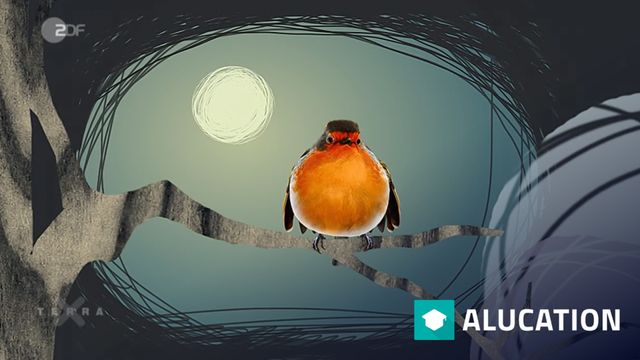
Why Don’t Sleeping Birds Fall Off Branches?

When a bird lands on a branch, it bends its legs, tightening the tendons and curling its toes around the branch. The deeper it squats, the tighter its grip becomes. Authors: ZDF/3sat/nano/Autorenkombinat/Holger Barthel und Daniel Beißmann/Markus Wohn/Maximilian Heß Translation and dubbing: alugha

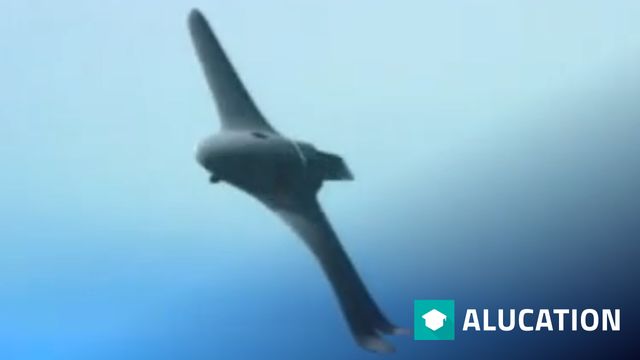
Transforming the Future of Flight

In the early 1900s, the Wright Brothers found inspiration for their first airplane in nature. Their "Flyer," which was modeled on a bird's flexible wing design, was steered and stabilized by pulleys and cables that twisted the wingtips. Despite its success, this control strategy quickly vanished fro