Key takeaways
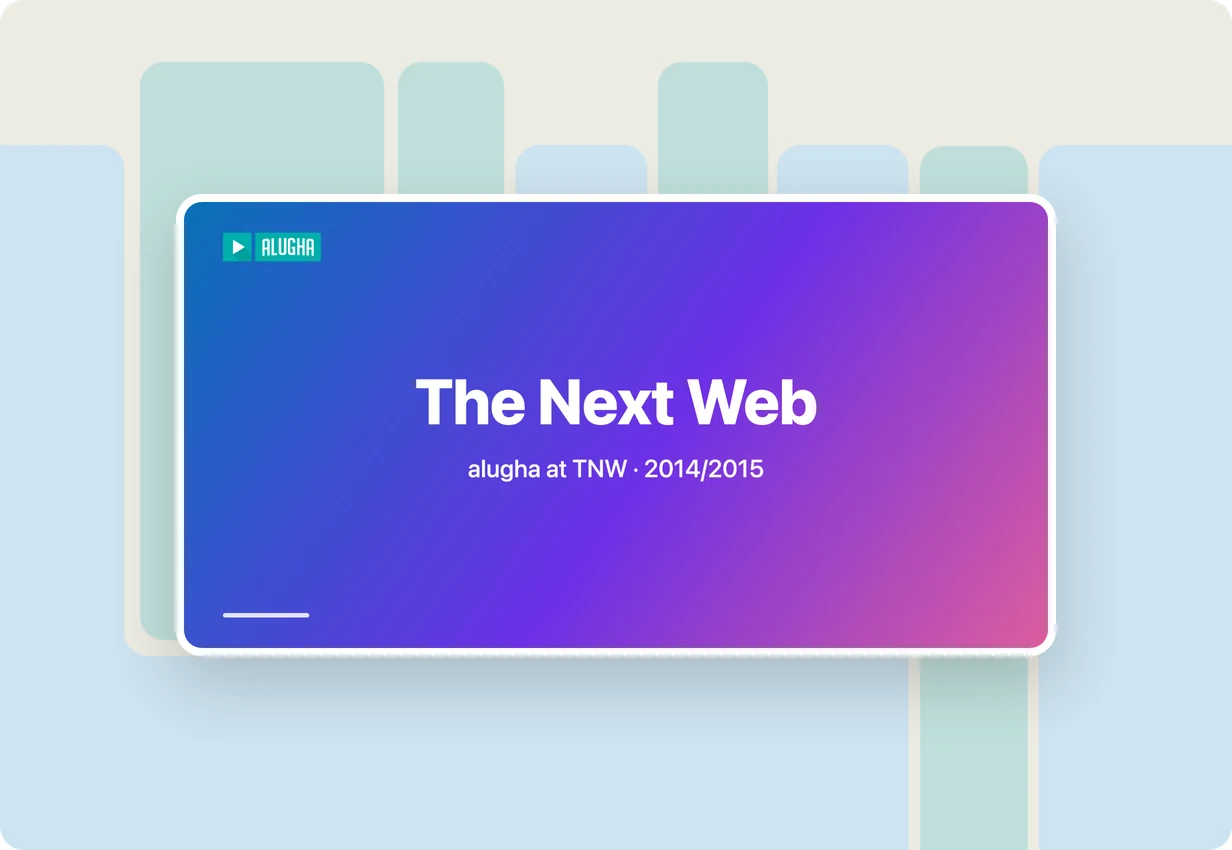
- alugha at The Next Web: selected as one of 70 startups for the TNW Conference and exhibited at the event in New York, at The Corner, 23 Wall Street, the former JP Morgan headquarters opposite the New York Stock Exchange.
- The booth ran nonstop: the alugha team was one of the first startups on the floor and fielded a steady rush of visitors asking the same opening question, “So, what is alugha?”
- Real conversations, real validation: former Disney staff, potential investors, and a Dutch company that asked alugha to localize its image video all confirmed the demand for one-video, many-languages delivery.
- The press picked it up: The Next Web featured alugha to an audience of millions of monthly visitors, a reach that put the young company in front of a global tech crowd.
- The idea behind the booth still ships today: one source video carrying many language tracks, subtitles, and dubbing from a single place. alugha turned that pitch into the product.
- Why it mattered: TNW was an early proof point that multilingual video is a distribution problem worth solving, not a feature to bolt on later.
What alugha did at The Next Web
It started with an email. A few days after applying, alugha learned it had been selected among the 70 startups invited to the TNW Conference, the global online-technology event run by The Next Web. Ten hours of flight time later, the team landed in New York with a simple plan: show as many people as possible what one multilingual video could do.
The venue was The Corner at 23 Wall Street, the former JP Morgan headquarters and an American landmark directly opposite the New York Stock Exchange. Official doors opened at 07:30, and alugha was inside fifteen minutes early, among the first startups ready to answer questions while the last-minute construction was still being finished. From there the booth barely had a quiet moment.
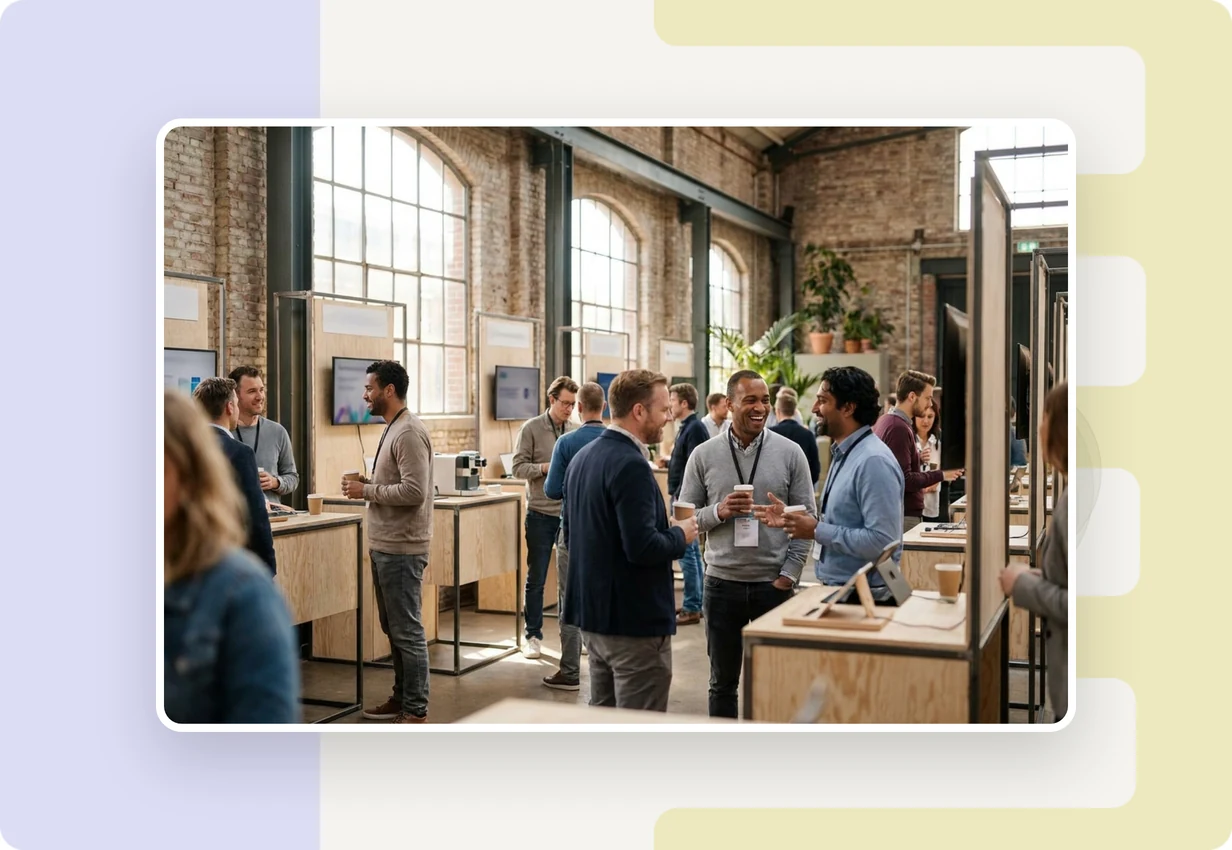
The conference floor had two stages around the startup booths. The main stage hosted prominent speakers, including the VP of Microsoft and the CTO of Amazon, while the boost stage gave the winners of the online voting their chance to pitch. At the start and end of each main-stage talk, the crowd around the alugha booth grew so fast that the small team could barely keep up. There were enough questions to wish for a second pair of hands.
Most visitors opened with the same line, “So, what is alugha?” The answers were ready every time, and the conversations went well beyond a quick demo. People asked the questions that still matter: are the translations generated automatically, who is the target group, and how much effort does it take to move existing content over. Each answer landed, and the gaps that surfaced showed exactly where the concept needed sharper framing to avoid misunderstandings.
Highlights from the floor and the press feature
The feedback was the kind a young company hopes for. The team spoke with former Disney staff and a number of potential investors, and the recurring message was that alugha had real potential. One Dutch company was impressed enough to ask, on the spot, for alugha to localize its corporate image video. That single request captured the whole pitch: take one finished video and make it speak more languages without rebuilding it.
Then the press caught on. The Next Web is a high-traffic publication that welcomes millions of visitors a month, and being featured by its editorial team put alugha in front of a broad global audience at exactly the right moment, with the beta about to open. Getting written up by a name that size was a milestone for a startup still finding its footing, and the team was proud of the coverage and everything that followed.
Looking back, the booth pitch and the press story pointed at the same idea that alugha ships today: keep one source video and layer many language tracks, subtitles, and dubbing onto it, so a single embed serves every audience. What was a demo on a conference floor is now a working multilingual video dubbing workflow.
Why The Next Web mattered for multilingual video
A conference like TNW is a stress test for an idea. You stand in front of strangers from every corner of the tech world and find out, in minutes, whether your pitch holds. For alugha, the verdict was clear: people understood the problem of single-language video the moment they saw a player switch languages, and they wanted it for their own content. The interest in the young company stayed unbroken across both days.
That early signal still shapes the product. Audiences are global, and a video in one language quietly leaves most of the world out. The fix is not a separate edit per market, which is slow and expensive to maintain. It is one source of truth that carries every language, so viewers pick their own track in the player and teams stop managing a file per market. The same logic now runs through alugha’s video translation platform.
Accessibility was part of the story from the start too. The same single file can carry accessible subtitles alongside its language tracks, so content reaches people who are deaf or hard of hearing, viewers in noisy settings, and audiences studying in a second language. And because data protection matters as much as reach, alugha pairs all of this with GDPR-compliant video hosting in Germany.
FAQ
What was alugha at The Next Web?
alugha was selected as one of 70 startups for the TNW Conference and exhibited at the event in New York. The team demoed multilingual video at a startup booth at The Corner, 23 Wall Street, opposite the New York Stock Exchange.
Where did The Next Web Conference take place?
The conference alugha attended was held in New York at The Corner, 23 Wall Street, the former JP Morgan headquarters and a landmark directly across from the New York Stock Exchange. Doors opened at 07:30.
What did alugha show at The Next Web?
alugha showed how one source video can carry many languages, with viewers switching their track directly in the player. The team demoed the workflow across different devices, operating systems, and browsers to prove it worked everywhere.
Did the press cover alugha at The Next Web?
Yes. The Next Web featured alugha through its editorial team, putting the company in front of a publication that welcomes millions of visitors a month. The coverage landed just before the alugha beta opened.
How does alugha handle multilingual video today?
alugha keeps one source video and layers multiple language tracks, subtitles, and dubbing onto the same file. A single embed serves every market, which removes the per-language file library and keeps every version in sync.
Event: The Next Web (TNW) Conference, 2014/2015. Location: The Corner, 23 Wall Street, New York. More about the event is on the official The Next Web website.