Key takeaways
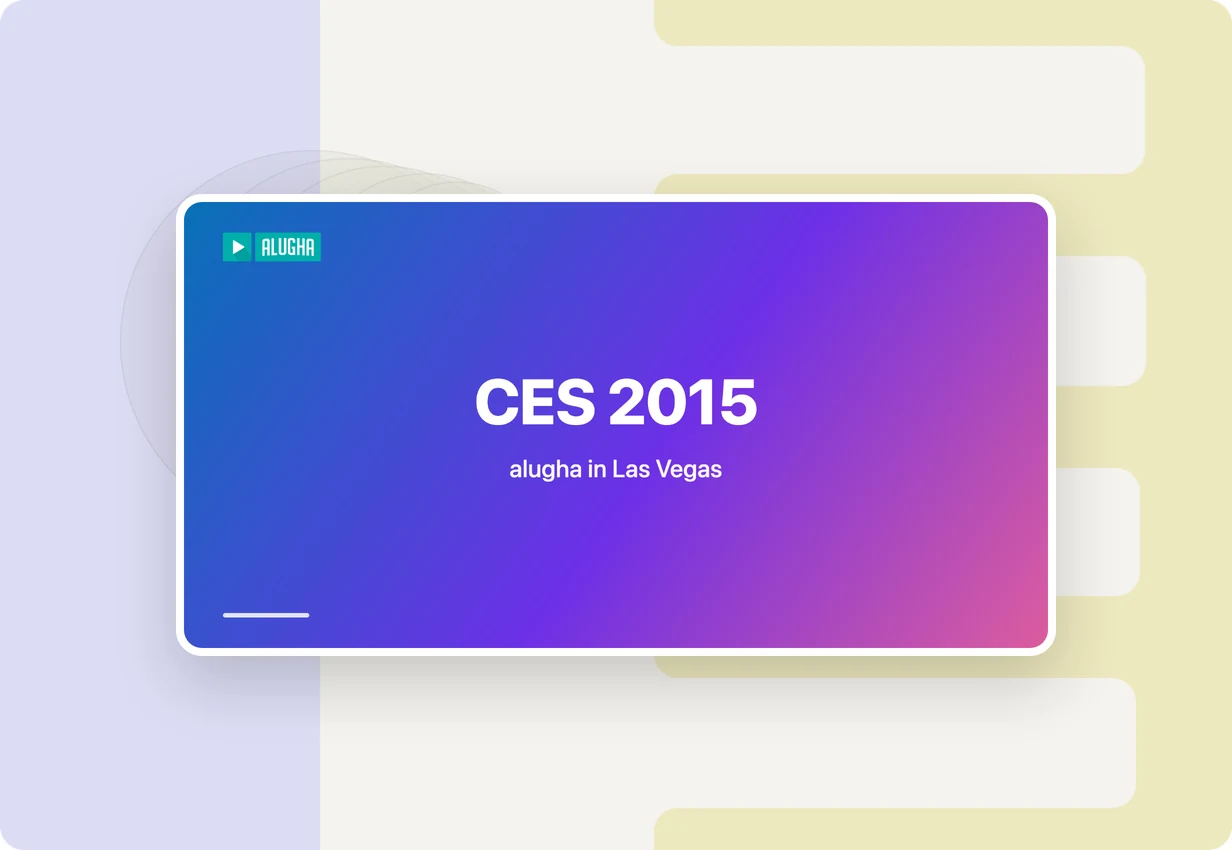
- alugha at CES 2015: the team exhibited at the International CES in Las Vegas from 6 to 9 January 2015, with a corner booth at the German Pavilion in South Hall 2.
- More than 80 visitors stopped by the booth, including names like Bosch and Google, plus streaming-content providers from around the world.
- The interest was broad: corporations, the Government of Utah, private schools, press outlets such as Euronews and dpa, private bloggers, YouTube creators, and even charities.
- The pitch was one idea: make a single video speak many languages instead of re-uploading a separate file per market. alugha built its booth conversations around that.
- CES 2015 was alugha’s first real step into the international market, and it opened the door to collaborations the team carried into the rest of the year.
What alugha did at CES 2015
The turn of the year is usually a quiet stretch. For alugha it became a road trip. While the holidays were still winding down, our founder packed a bag, flew to the United States, and pointed the trip at the one place where the technology world starts every year: the International CES in Las Vegas. For a young company set on meeting like-minded people and seeing the newest of the new, there was no question about being there.
From 6 to 9 January 2015, alugha exhibited from a corner booth at the German Pavilion in South Hall 2. Once the stand was set up and the team had a feel for the floor, the booth opened to questions, and the questions did not stop. Over the four days more than 80 visitors came through for a full walkthrough of what alugha could do, and the conversations ranged from global enterprises to single creators.
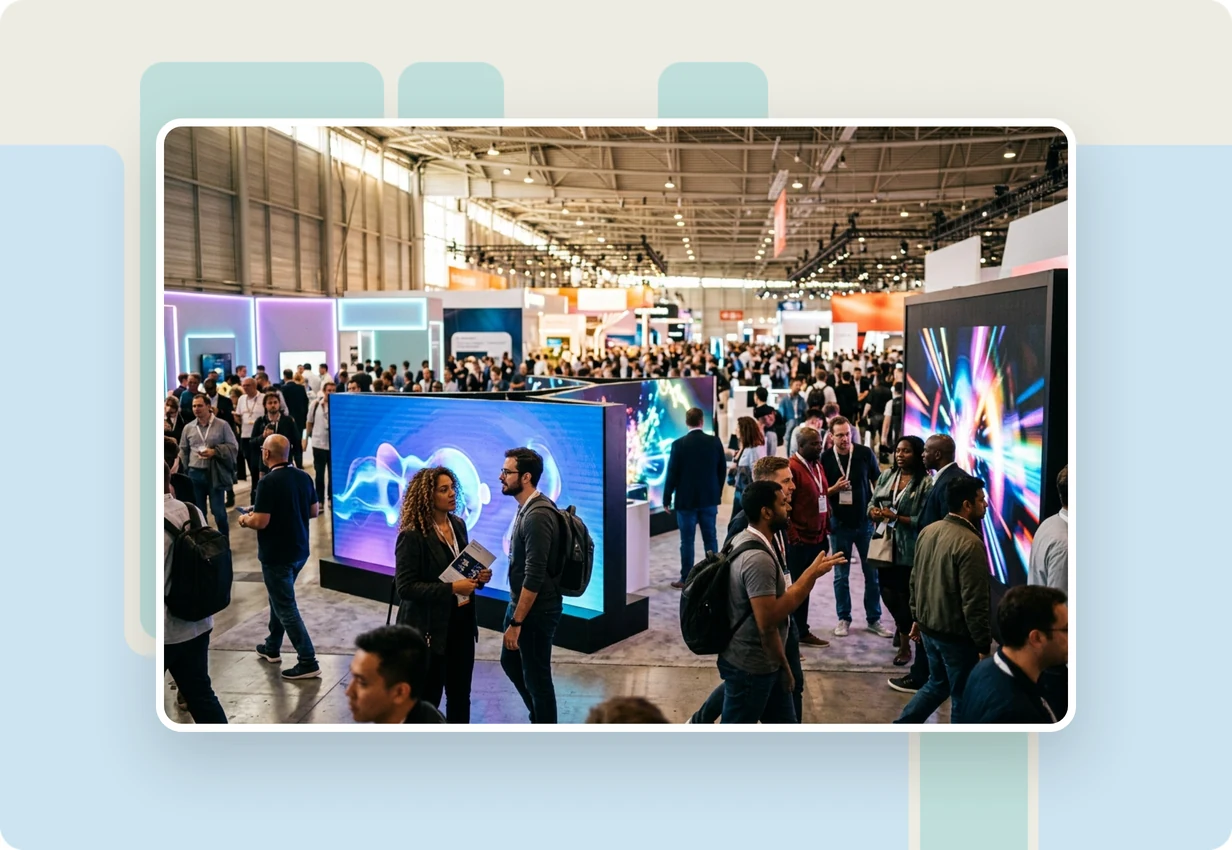
The idea on the table was simple to explain and hard to ignore: one video should be able to carry many languages, so reaching a new market does not mean producing and hosting a new file each time. In a hall full of hardware launches, that software-first take on reach gave the alugha team plenty to talk about with content providers who were already wrestling with international audiences.
Highlights from the alugha booth in Las Vegas
What made the four days memorable was the range of people who stopped to listen. The booth drew a mixed crowd, and that mix told us where multilingual video could go:
- Global enterprises: companies the size of Bosch and Google sat down for a detailed look at the concept.
- Public institutions and education: the Government of Utah and private schools saw a fit for reaching audiences across languages.
- Press and media: outlets such as Euronews and dpa took an interest in how the concept worked.
- Creators and bloggers: a newer audience for us at the time, private bloggers and YouTube creators saw alugha as a way to grow reach.
- Charities: nonprofit organizations wanted to use multilingual video to recruit more donors and volunteers.
The effort paid off well beyond the show floor. The team left Las Vegas expecting a year of collaborations with different platforms and companies, and CES 2015 became the moment alugha stepped into the international market for the first time.
Why CES mattered for multilingual video
CES is where the technology market shows the newest of the new, and the visitors are the who-is-who of the scene: exhibitors, buyers, and press in one place. For a platform built around language, that room mattered. The conversations in Las Vegas kept circling back to one pain point: video does not cross borders on its own. A clip that performs at home quietly loses most of its audience the moment it travels, because viewers stay longer and understand more when content reaches them in their own language.
alugha’s answer then is the same answer now. Instead of cutting a separate edit per market, you keep one source video and layer language tracks onto the same file, and the viewer simply picks a language in the player. That removes the per-language file library, keeps every version in sync, and lets a single embed serve every audience. It is the same logic that powers educational video localization today, and the reason a single multilingual video still beats a folder of one-language exports.
Accessibility: subtitles and audio description
Reaching a wider audience is not only about languages. It is also about who can follow a video at all. The same single-file approach that carries language tracks also carries accessibility, so reach and inclusion grow together rather than competing for budget.
In practice that means accessible subtitles and audio description produced as part of the normal workflow rather than as an afterthought. Subtitles support viewers who are deaf or hard of hearing, viewers in noisy settings, and people watching in a second language. Audio description opens the same video to viewers who are blind or have low vision. Both travel with the multilingual file, so accessibility scales with every language you add.
How alugha has grown since CES 2015
The core idea pitched in Las Vegas has only deepened. Today alugha pairs that one-video-many-languages model with AI-assisted transcription, translation, and voices, professional subtitles and audio description, and hosting that takes data protection seriously. For teams that need their content to stay inside an EU data-protection framework, GDPR-compliant video hosting in Germany is part of the same package, so reach, accessibility, and compliance live in one workflow instead of three.
A corner booth in South Hall 2 was the first proof that the concept travels. The audiences alugha met at CES, from enterprises to creators to nonprofits, are still the audiences building multilingual, accessible video today.
FAQ
When and where was CES 2015?
CES 2015, the International Consumer Electronics Show, ran from 6 to 9 January 2015 in Las Vegas. alugha exhibited from a corner booth at the German Pavilion in South Hall 2.
What did alugha at CES 2015 show visitors?
alugha showed how a single video can carry many languages, so reaching a new market does not require a separate file per language. The team walked more than 80 visitors through the concept and how it helps companies, institutions, and creators grow their reach.
Who visited alugha at CES 2015?
More than 80 visitors came to the booth, among them global companies like Bosch and Google, the Government of Utah, private schools, press outlets such as Euronews and dpa, private bloggers, YouTube creators, and charities.
Why was CES 2015 important for alugha?
CES 2015 was alugha’s first step into the international market. The booth conversations with content providers and enterprises set up a year of expected collaborations and confirmed that demand for multilingual video reached far beyond one region.
Does alugha still offer what it showed at CES?
Yes, and more. The one-video-many-languages model is still the core, now paired with AI-assisted transcription, translation, and voices, professional subtitles, audio description, and GDPR-compliant hosting in Germany.
Date: 6 to 9 January 2015. Location: International CES, German Pavilion, South Hall 2, Las Vegas. More about the show is on the official CES website.