Search results for “Science Astronomy Solar System Planets Neptune”

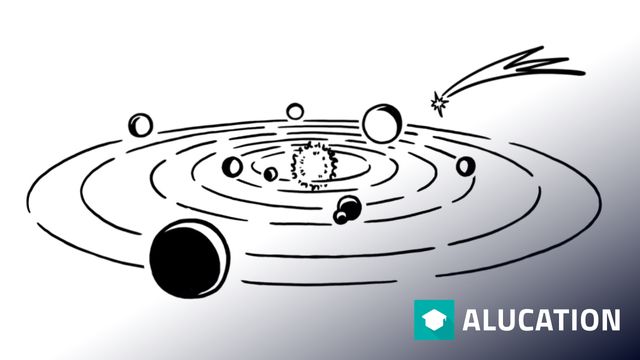
Earth Systems Science

Click here to see more videos: https://alugha.com/SystemsInnovation Take the full course: https://systemsinnovation.io/course/ Follow along with the eBook: https://systemsinnovation.io/books/ Twitter: http://bit.ly/2JuNmXX LinkedIn: http://bit.ly/2YCP2U6 A brief overview to the area of Earth System
The Solar System's Boundaries | NASA Planetary Sciences

Discover what happens at the outer edges of our solar system, where the solar wind interacts with interstellar space. The Interstellar Boundary Explorer (IBEX) is a mission to study the boundary between the solar system and interstellar space. Voyager 1 and 2 have provided some direct measurements f

Measuring Distance in the Solar System | NASA Planetary Sciences

Explore how astronomers and scientists use astronomical units to measure distances in the solar system in this video adapted from NASA. The astronomical unit (au) -- equal to the average distance from Earth to the Sun -- is a convenient unit of measure when talking about distances in the solar syste

What Is a Dwarf Planet? | NASA Planetary Sciences

In this video from NASA, learn about the history of defining a planet, and examine how classification changes based on new knowledge. Our understanding of the solar system has evolved since the ancient Greeks, who first used the word planetes to distinguish the objects that moved against the backdro

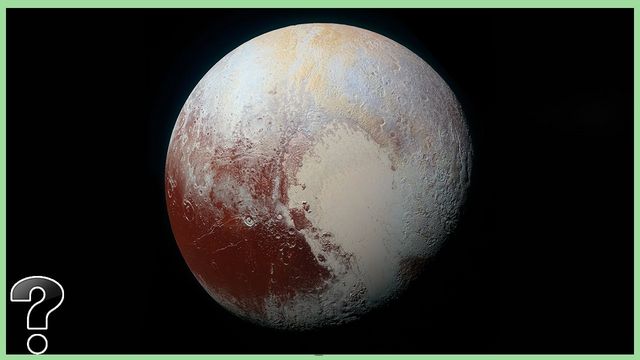
Is Pluto A Planet?

Click here to see more videos: https://alugha.com/LifesBiggestQuestions Pluto, pluto, pluto. If you were in school prior to 2006, you grew up knowing that pluto was the 9th planet in our solar system. But in 2006, it was somewhat demoted, to the status of a dwarf planet. Then in 2017, scientists de

Using Color to Identify Planets | NASA Planetary Sciences

Discover how scientists compare the reflected red, blue, and green light from planets in our solar system to identify Earthlike planets beyond our solar system more easily. Carolyn Crow, a member of the Deep Impact science team, describes how the amount of green, blue, and red light reflected by pla

First Spacecraft at Neptune | NASA Planetary Sciences

Learn about the Voyager 2 mission to Neptune in this video from NASA. Voyager 2 reached Neptune in 1989, 12 years after launch, and the flyby was the first and only time a spacecraft has visited Neptune. The planet appears blue because of the methane in its atmosphere. Voyager 2 discovered at least

The Evolution of the Kuiper Belt | NASA Planetary Sciences

Learn about Neptune's gravitational effect on dust contained in the Kuiper belt and discover how it could help astronomers look for planets around other stars. This video from NASA explores the idea that if would-be alien astronomers were looking for planets around the Sun, they could potentially de