Search results for “Molecule Surface”

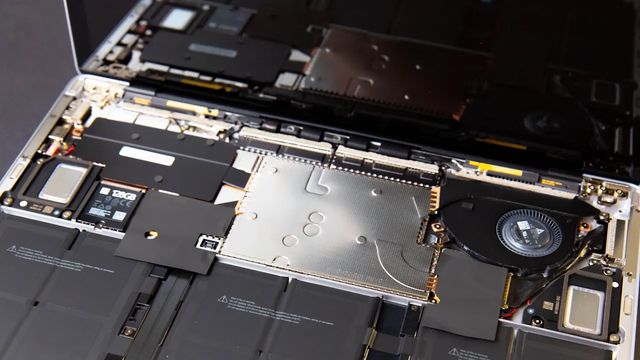
Microsoft Surface Laptop 3 Upgrade guide - ENG

For the first time ever, Microsoft enabled you to upgrade a surface device yourself: the #SurfaceLaptop3. We demonstrate how to do it and which parts you can change. M.2 Enclosure used: https://www.notebooksbilliger.de/icy+box+ib+1817m+c31+externes+type+c+gehaeuse?nbb=yt.TqRtDckTPSY Surface Laptop


09 Polar Molecules

Why are some molecules polar, others not? Can this be seen in the molecular structure? Original: "Wolfgang Dukorn" Original: German. All translations in this video have been done by the alugha AI.

08 Naming of Molecules

From the molecular formula to the molecule name. What is carbon tetrachloride? Can you infer the molecular formula from the name? Original: "Wolfgang Dukorn" Original: German. All translations in this video have been done by the alugha AI.

08 The Electron Pair Bond - Molecules

Molecules are compounds of non-metal atoms. But how does the bond come about? They cannot give up or absorb electrons completely, because both partners want to have more. Using the fluorine molecule as an example, the electron pair bond is explained with the help of the energy level diagram. Origin

08 Reaction Equations Molecules and Salts

A reaction equation with molecules and salts (possibly also with metals) together is very demanding for the initial lessons. How to proceed and also how to comply with the law of conservation of mass follows in this screencast. Original: "Wolfgang Dukorn" Original: German. All translations in this

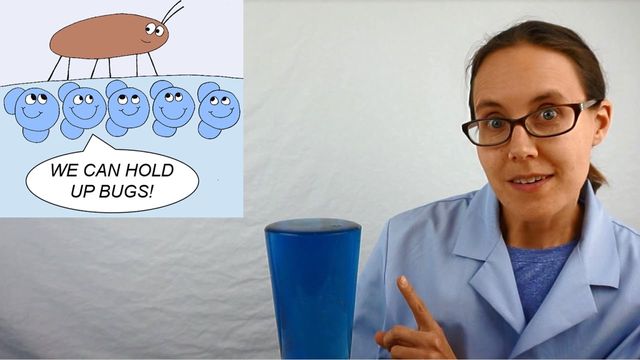
Science Mom's Guide to Water, Part 2 - Surface Tension

To download and print out the free foldable book that accompanies this video, go to https://science.mom/science-mom-s-guide-to-water-part-2. For a great overview of the basic properties of water, check out the Amoeba Sister's PROPERTIES OF WATER: https://www.youtube.com/watch?v=3jwAGWky98c If you'

The Effect of Sea Surface Temperature on Hurricanes

This video segment adapted from NOVA scienceNOW highlights research that supports the idea that warmer oceans generate and sustain more intense hurricanes. Ongoing monitoring of sea surface temperature (SST) has supplied evidence that the world's oceans warmed 0.5°C between 1970 and 2005. Because hu