Exclusive Interview: Kesselhaut and the Art of Telling the Truth in Song – Only on ALUGHA
By Bernd Korz, Founder & CEO, ALUGHA
At ALUGHA, we live and breathe innovation, creativity, and multilingual storytelling. So when a true artist like Kesselhaut chooses to release not only his music but his visual stories exclusively on our platform, it's more than an honor – it's a signal that independent artistry has found a new home, away from the noise of algorithms and clickbait.
With the release of his double album, Kesselhaut – Vintage Mother, and the accompanying remix album Mr. LuckyLoop Remixes, Kesselhaut redefines the boundaries between music, family, personal history, and storytelling. His music videos are not on YouTube. They are ALUGHA exclusives – each one a short film, a piece of his truth, crafted with love, pain, and joy.
We sat down with the artist himself to delve deep into the stories behind his five standout videos – all hosted exclusively on ALUGHA.
BERND KORZ: Adam, or should I say Kesselhaut, first off – congratulations. You've released a double album, and you're giving ALUGHA your exclusive video content. Let's start with the track “Never Let's Up.” It's raw. It's devastating. And it's beautiful. Tell us about the song and the video.
KESSELHAUT: Thank you, Bernd. “Never Let's Up” is probably the most emotional song I've ever written. It's about divorce – not as a legal procedure, but as this emotional earthquake that leaves nothing the way it was. In the song, there are two characters – Sammy, who represents all fathers struggling to stay present after the family splits apart, and Isabel, who stands in for the kids. She's trying to be happy just to keep Sammy from falling apart. That's the heartbreak. They're both pretending at times. They almost lose each other… but they also keep finding each other. That's where the hope is.
In the video – and this is real footage – I used clips from family vacations with my daughters Amina and Amalia. There's this surreal sense that the house is upside down, that gravity is off. That's how divorce feels to a child. The second section is from our old home, where the ghosts of happier times linger, but we're still laughing, still holding on. Then you see our new home. There's a moment where mom walks out the door, and the girls are crying. But at the end, you see it: We're still a family. A changed family, but a real one. That's what I wanted to show.
BERND: I love that your daughters are a part of it. Now, let's talk about “We Call It Magic.” It's nostalgic, but there's also a very deep darkness underneath it. What's the story?
KESSELHAUT: This one is about my brother Matt and me. And our dog – a miniature schnauzer named Liebchen. She came into our lives right before our parents' marriage fell apart. I think she kept us sane. There's this image in my head of Liebchen running through the autumn woods and us chasing her – it felt like a movie. We were just kids, but those moments saved us.
In the video – I went full experimental. I used AI, not to fake reality, but to amplify the emotional storytelling. I wanted it to feel slightly off, because our memories are like that. They're warped and dreamlike.
There's also a scene – and this was hard to create – that references the car accident that killed my mother. It was manslaughter – caused by my stepfather. That scene is in the video. You also see my father – a professional photographer – filming. He's the silent witness, the bystander. And then he too falls, representing his recent passing.
At the end, it's just me, my brother, and Liebchen. The last remnants of a whole that broke long ago. And still, in that brokenness, there's a kind of magic.
BERND: Wow. That's deeply personal and courageous. The third video – “I Can't Afford to Buy Cheap Shoes” – is wildly different in tone but still rooted in your family. What inspired it?
KESSELHAUT: It's a tribute to my dad, who used to say all these quirky, wise things like, “You can't afford to buy cheap shoes.” He meant: if you spend more on something good, it lasts longer – a metaphor for so many things in life.
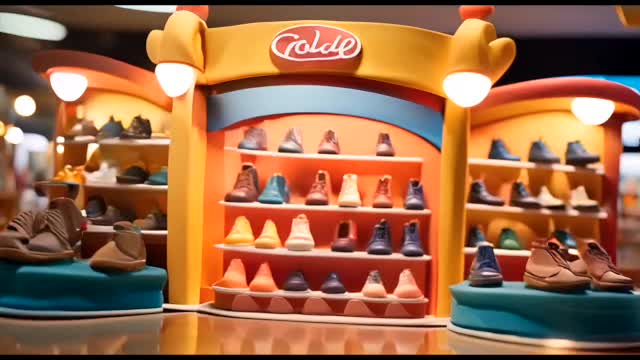
The video is entirely claymation, done using AI, again not to imitate reality but to stylize the emotion. My daughter Amina plays the lead character – a little girl who sees her father suffering as her mother grows sick. And she thinks: maybe money can fix this. So she sacrifices her childhood fantasies – unicorns, fairies – turning them into beautiful shoes to sell.
You also see some extremely dark moments – the violent death of my mother, the hospital sickness of my wife, the emotional confusion of a child witnessing this. The claymation makes it somehow digestible, but the pain is real. Eventually, this fantasy world collapses into a nuclear war – fairies vs. kobolds – this apocalyptic metaphor for innocence lost and desperation.
It's a fever dream. But it's also a love letter to my father's grit and my daughter's empathy.
BERND: This is art, no question. Let's talk about something more urban – “Get on the Night Train.” What's the story behind this one?
KESSELHAUT: This one's my anthem for all the misfits. The video is super simple – I'm riding the Berlin U-Bahn at night, singing alone, trying to figure life out. But it's cut carefully to feel like more than a music video – it's a meditation.
The lyrics are about finding your place. “If you want to be here, there's a place for you.” That line means everything to me. It's about inclusion, acceptance, and calling out people who stand in the way of others trying to be themselves. It's a rejection of small-mindedness.
And helping me shoot the video was Mason Pharis, a good friend, who really got what I was trying to do. There's a brotherhood in this song. And honestly, I hope it makes people feel like they belong somewhere.
BERND: Your last video, “Being Alone Together,” feels like a return to family. Tell us about that.
KESSELHAUT: Absolutely. This song is about how beautiful it is to do your own thing – but also how beautiful it is to do your own thing with someone you love. It's about sticking it out, especially in family.
In the video, my daughters are celebrating the birthday of their stuffed snake, Snaky – it's funny and sweet. My older daughter is deep in her fantasy, giving Snaky elaborate gifts. But the younger one feels left out, hurt.
The next part shows them preparing a real birthday for their mom – drawing, baking, planning. It's such a joyful moment of co-creation, healing, and togetherness. Also in the video is their grandmother, who plays a strong, loving role.
It's about getting past little hurts so that love can stay alive. That's what being alone together means to me.
BERND: Kesselhaut, I have to say: I've never done an interview quite like this. You've turned your pain, your joy, your family, your art, your history – into something profound. And you chose to host it only on ALUGHA. Why?
KESSELHAUT: Because I want the videos to live somewhere safe. Somewhere human. YouTube is fine for many, but I didn't want my work to be surrounded by ads or sucked into the algorithmic void. These videos are like letters from my soul, and ALUGHA lets them breathe.
Also – ALUGHA supports multilingual storytelling, creative independence, and real connection. That's the future of media, and I want to be part of building that.
BERND: We are so honored to host your work. Last question – what's next?
KESSELHAUT: More music. More stories. More videos. But above all: staying real. Staying connected to what matters. My daughters. My family. My truth. And working with platforms like ALUGHA to build something that matters.
Watch the videos exclusively on ALUGHA
All five videos by Kesselhaut are available now – only on ALUGHA.
▶ Visit www.alugha.com to explore the full experience.