Search results for “protoplanetary disk”

The Nebra sky disk

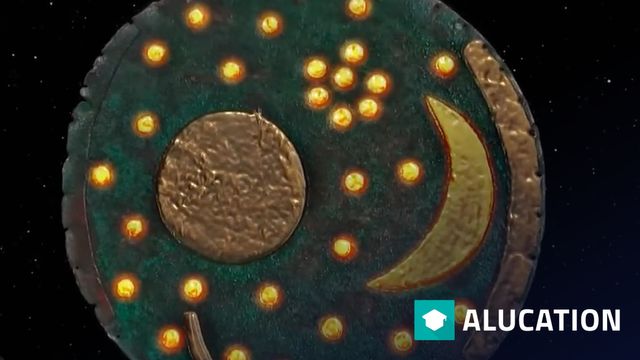
The Nebra sky disk is the world's oldest known concrete representation of astronomical phenomena and is more than 3600 years old. It shows a crescent moon, the full moon - sometimes interpreted as the sun - and a total of 32 stars. Author: ZDF/Terra X/SPIEGEL TV/Christopher Gerisch/Tilman Remme/Rei

The Evolution of the Kuiper Belt | NASA Planetary Sciences

Learn about Neptune's gravitational effect on dust contained in the Kuiper belt and discover how it could help astronomers look for planets around other stars. This video from NASA explores the idea that if would-be alien astronomers were looking for planets around the Sun, they could potentially de

The Formation of Stars | NASA Planetary Sciences

Discover how the James Webb Space Telescope will help us better understand solar system formation in this video from NASA. Images from the Hubble Space Telescope show star-forming regions within the Eagle nebula: visible light images show vast clouds of gas and dust, and infrared images provide a gl

Investigating the Moon's Interior | NASA Planetary Sciences

Discover how scientists plan to use data from the GRAIL mission and a map of the Moon's gravitational field to learn about its internal structure. By comparing data about the Moon's gravity with information about its topography, scientists can gain a better understanding of the Moon's formation and

Why Study Comets?

Learn what comets are and how they inform us about the early solar system, in this video adapted from NASA. Comets, which are made of frozen gases, ice, dust, and rock, are typically in a deep freeze in the outer solar system. But when a comet nears the Sun, it loses streams of gases and forms a com

The invention of the battery

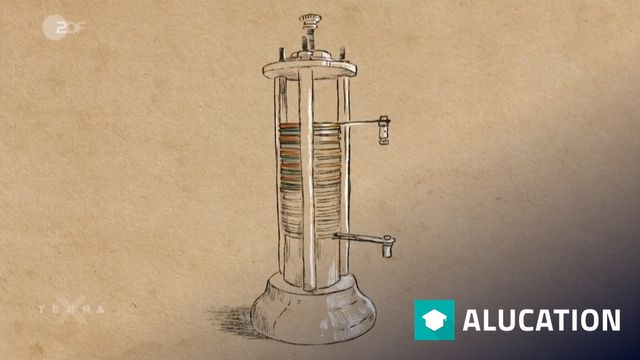
By layering copper disks, cardboard dipped in acid and zinc disks, physicist Alessandro Volta invented the so-called "voltaic pile," the world's first battery. Author: ZDF/scobel/Claus Ast/Tamara Skalski/Maximilian Mohr Translation and dubbing: alugha Click here to see more videos: https://alugha