


Key takeaways
- Tourette.de moved its first-party video off YouTube to alugha. A health-information platform serving a sensitive audience cannot comfortably route its visitors through a US hyperscaler’s tracking layer for content it owns and controls. Third-party videos that exist only on YouTube stay embedded from there by necessity; everywhere alugha is possible, alugha is now the default.
- The compliance posture was the operational driver, not a marketing claim. CJEU Schrems II (Case C-311/18), the Austrian DSB decision DSB-D213.679/0003-DSB/2022 on Google Analytics, and the EDPB Guidelines 02/2023 on cookie tracking all push the same way for embedded YouTube players on EU traffic.
- The decision started with shared understanding. alugha’s CEO Bernd Korz lives with Tourette syndrome himself and was a reader of tourette.de long before any vendor conversation. The selection process was credibility-driven, not feature-checklist-driven.
- The migration ran without visible disruption. Videos uploaded, embeds generated, cookie consent reconfigured, site untouched. The visitor experience stayed identical. The trust foundation underneath improved.
- alugha is built for this lane. German-hosted, GDPR-grade, privacy-first analytics, embed-ready player. alugha ships the compliance posture as the default, which is what health-information platforms serving sensitive audiences need from a video host.
About the platform
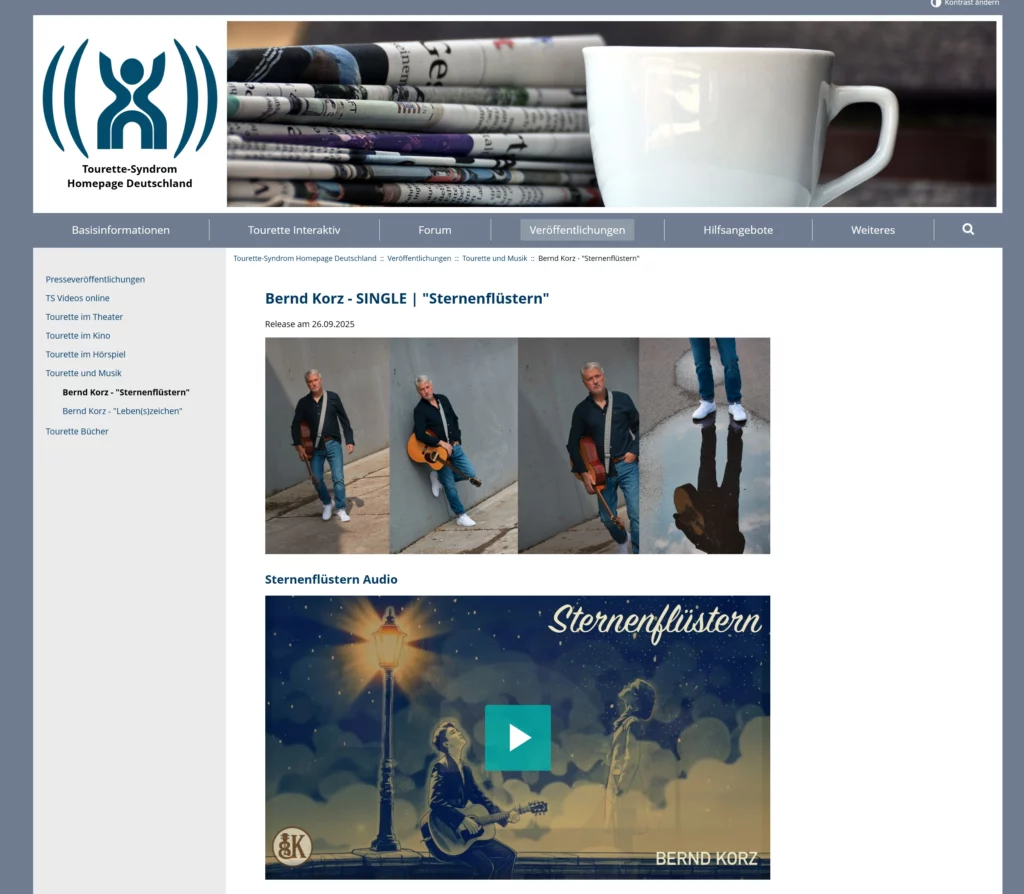
Tourette Online, operated by Hempel Media from Lüneburg, Germany, is one of the leading German-language information platforms for the Tourette syndrome community. The site provides patient-focused, scientifically accurate content for people affected by Tourette syndrome, their families, healthcare professionals, educators, and the broader public seeking trustworthy information. As a privately operated platform on a sensitive medical topic, tourette.de carries an elevated responsibility for the privacy of the visitors who arrive there.
The compliance problem with embedded YouTube
For years, video content on tourette.de was distributed primarily through YouTube. The reach was useful, the setup was free, the editorial team could focus on content. The problem sat underneath. A health-information site serving people with a neurological condition cannot route its visitors through embedded players that load third-party trackers, cookies, and fingerprinting scripts from a US hyperscaler without creating a tension between mission and infrastructure.
The tension is no longer abstract. CJEU Schrems II (Case C-311/18) put EU-US transfers under documented-basis scrutiny. The Austrian DSB decision DSB-D213.679/0003-DSB/2022 on Google Analytics confirmed the regulator-facing pattern. EDPB Guidelines 02/2023 on cookie tracking are explicit that any client-side storage falls under Article 5(3) ePrivacy and requires prior consent. For an embedded YouTube player on a health-information page, the legal posture is documented exposure on every visit.
Beyond the legal layer, Hempel Media wanted to reduce its dependence on a single American distribution channel. Aligning the infrastructure with European data sovereignty principles was a strategic question, not a compliance afterthought. The requirement was clear: a video hosting solution that hosts in Germany, complies with GDPR by default, delivers an embed-ready player, and integrates cleanly with the existing cookie consent setup.
The decision for alugha
For tourette.de, the choice of alugha was less of a traditional vendor selection and more of a meeting between two parties who already shared the same ground. Bernd Korz, alugha’s CEO, lives with Tourette syndrome himself. Long before any conversation about video hosting started, he was already a reader of tourette.de and an occasional guest contributor to the platform, writing about his own experience with the condition. That overlap meant Hempel Media was not pitching its mission to a sales team. It was talking to a founder who genuinely understands the audience the platform serves.
My honest reading is that this is the kind of vendor relationship most case studies miss. The selection conversation was already over before it started, because the alignment between platform mission and vendor founder was already known. Three operational factors confirmed the decision.
- German server location. All video hosting, delivery, and processing run on European infrastructure with servers based in Germany. Cross-border data transfer concerns are removed at the platform layer.
- GDPR-compliant player as the default. A privacy-first player that loads without third-party tracking and aligns with European data protection requirements by default, not as an opt-in setting.
- Clean Contao integration. An embed-ready player that drops into existing pages on the tourette.de Contao CMS without rebuilding the site, plus a workable path for connecting to standard cookie consent tools.
- Personal, hands-on partnership. Direct contact with the alugha team, short response cycles, and the willingness to support a small owner-operated business with the same care as a larger account.
For the structural procurement view of why creator-platform defaults are no longer the right fit for regulated EU surfaces, our Vimeo alternative analysis walks through the same comparison logic for a different US-hosted video platform.
A side note while we are on this lane: alugha publishes daily updates on LinkedIn — customer migrations, EU compliance dates, and privacy-first video architecture patterns. If that is the cadence your team needs, follow alugha on LinkedIn for the running thread.
Implementation
The migration to alugha was straightforward. Videos were uploaded, embeds were generated, and the new player was placed on tourette.de without rebuilding the site. The only minor hurdle was the integration with the existing cookie consent tool, a step Christian Hempel describes as “always a bit of fiddly work, regardless of which provider you use”.
With short feedback loops between Hempel Media and the alugha team, the cookie consent configuration was completed and the videos went live in a fully GDPR-compliant state. The switch produced no visible disruption for visitors and no extra operational overhead for the editorial team. The wider compliance and access-control posture that ships with the player by default is covered in depth in our piece on enterprise video security.
One nuance worth naming. The migration was not a hundred-percent move off YouTube. Third-party content (interviews, news segments, external contributions) that exists only on YouTube remains embedded from there by necessity, because the source is the source. The change is for first-party content. Wherever tourette.de owns the source and the upload, the video now runs on alugha. Where the source is YouTube and only YouTube, the embed stays. The operating principle is simple: alugha is the default where alugha is possible, and YouTube is kept only where there is no other path to the content.
Results: what changed for tourette.de
The move from YouTube to alugha shifted the foundation of video delivery without disturbing the surface. From a visitor perspective, the videos simply work. From a compliance, mission, and infrastructure perspective, the change is significant.
- Full GDPR compliance by default. Video playback for sensitive health content now meets European data protection standards without configuration, with no third-party tracking and no cross-border data transfers.
- Stronger trust signal for a sensitive audience. A privacy-first video player on a health-information platform reinforces the credibility tourette.de needs with visitors, healthcare professionals, and partners.
- Reduced platform dependency where it counts. First-party content is no longer locked into a single US video platform. Third-party videos that exist only on YouTube stay there because there is no alternative source, but every embed Hempel Media actually controls is now on European infrastructure.
- Personal partnership instead of helpdesk anonymity. Direct human contact with the alugha team replaces the inaccessible support of large platforms, which matters disproportionately for an owner-operated organisation.
For a wider perspective on the German-hosted, EU-only architecture behind the alugha posture, see our piece on made-in-Germany secure video hosting.
FAQ on the tourette.de YouTube-to-alugha migration
Why does an embedded YouTube player create compliance exposure on EU health-information sites?
The embedded YouTube player routes traffic to US infrastructure, sets persistent cookies, and surfaces algorithmic recommendations. CJEU Schrems II (Case C-311/18), the Austrian DSB DSB-D213.679/0003-DSB/2022 decision on Google Analytics, and EDPB Guidelines 02/2023 on cookie tracking all confirm that the unmodified setup requires a documented Article 44 transfer basis and prior consent under ePrivacy. For a health-information platform serving a sensitive audience, that is exposure on every visit.
Did the tourette.de YouTube alternative case study require a website rebuild?
No. The alugha embed is a standard HTML snippet that drops into existing Contao pages without changes to the underlying site. The tourette.de Contao CMS handled the player like any other embedded element. The only configuration step was connecting the alugha player to the existing cookie consent tool, which was handled in short feedback cycles with the alugha team. The site structure, design, and editorial workflow stayed identical.
How long did the migration take?
The technical migration was fast. Uploads, embed generation, and on-page replacement landed within a single project window. The longest line item was the cookie consent integration, which is typically the slowest part regardless of the chosen video platform. With Hempel Media and the alugha team in direct contact, the integration shipped without back-and-forth ticket cycles.
What about the existing YouTube footprint and third-party videos?
The previous YouTube footprint of tourette.de’s own channel stays where it is. The migration is for the first-party content embedded on the site itself, not for the channel back-catalogue. Third-party videos (interviews, external news segments) that exist only on YouTube are still embedded from there, because that is where the source lives. The principle is alugha as the default where alugha is possible, and YouTube only where there is no other path to the content. The brand domain consolidates the SEO authority on the site side, which is where it belongs.
For the broader procurement view on GDPR-grade video hosting, see our pillar on GDPR-compliant video hosting. For a sibling comparison-page perspective on competitor evaluation, see our Vimeo alternative analysis.